



Part 4: Eight Months In, Elliot Has Crossed China
Five thousand kilometres in two months, an astonishing number of trucks, and far more city parks than wild camps. When I caught up with Elliot, he was in Ha Giang in northern Vietnam, twenty kilometres from the Chinese border, sheltering from the rain. He had also made a decision: his journey will end in Singapore.
From Sweden to Australia Singapore by bicycle. Part 4.
The last time we spoke, Elliot was in Urumqi with most of China in front of him. This time, he was already on the other side of it.
He had reached Ha Giang the day before our call. Around 5,000 kilometres through China, in almost exactly two months. Even he sounded slightly surprised.
The visa that worked out
In Part 3, the plan was Xining, a visa extension, and possibly a train to Hong Kong to leave and re-enter the country.
It went differently, and with fewer problems than he had feared. Two counties on the road to Xining were closed to foreigners, so he extended his stay in Lanzhou instead. That gave him another 30 days. By Chengdu, he was moving fast enough that he might skip the train to Hong Kong, and in Kunming he knew he could. He crossed into Vietnam on the last day China allowed him.
The train would also have been expensive, and he would rather spend the time in Southeast Asia. China, he says, is the size of a continent. He cycled through about half of it, and the coast, Beijing and Shanghai will have to wait. He is going to come back: “There’s a lot left that I want to see.”
From desert to jungle
China had begun with the Tian Shan, on the way to Urumqi, over the Duku Highway and a pass at 3,450 metres. After Urumqi came the Gobi, some 700 kilometres of desert, then semi-desert, then slowly more towns and people, all the way to Lanzhou.
From Lanzhou, he rode south-west and up onto the Tibetan plateau. Not into the Tibet Autonomous Region, which requires a special permit and a guide, but through the Tibetan regions around it: monasteries, Tibetan script, villages with livestock and hardly a tree. It reminded him of Tajikistan. He rode at 3,000 to 3,500 metres, with peaks above him. The weeks before he arrived, snow had covered the roads. He got hail and a little snow that never settled.
Then he descended towards Chengdu, and the country changed again. Bamboo, humidity, jungle, and pandas in Chengdu. Nights went from below zero to 20 degrees, with about 3,000 metres of altitude in between.
And the food, which he calls “probably the best I’ve had on the whole trip”. He is vegetarian, a meal costs 10 to 30 yuan, and he cooked his own only in the Gobi.
A great many trucks
China also had a lot of trucks.
Elliot looked it up and found 13 million truck drivers, more than the entire population of Sweden. Other estimates go higher still. Out on the road, it was easy to believe. Every truck sounds its horn when it overtakes, to let you know it is there. Sensible, perhaps. Less fun when you are the one on the bike.
He mostly took the most direct road, and on those the trucks are a given. When he tried smaller roads, it did not help. Even to the villages, he says, everything goes by truck: building materials, food, whatever the farms produce.
Even in the smallest village in the mountains, there were trucks.

On one very beautiful road on the Tibetan plateau, they were building a high-speed railway alongside him, and the trucks came and went with materials. After about a month and a half, he admits, he had had enough of them.
Camping in a crowded country
He was not sure camping would work in China. It did. He has camped, he says, “about as much as I always have.” The difference is where. In Central Asia, he could pitch the tent with a mountain view or beside a river. In China, about 90 per cent of the time it was a city park, a basketball court or a football pitch. Looking through his photos recently, he found that the only real wild camps were one night on the Tibetan plateau and the Gobi crossing.
With more effort, he says, he could have found better spots. But with the visa clock running, he could not make long detours, so most days ended in or near a town. And that is what made China easy: food, a bed, or a park where the tent was fine were never far away. The price is quiet. He could not remember a single moment when he could listen and not hear a person, a car or a machine.
Still, the parks had their charm, as he wrote to me after our call. A great many older people in China spend their mornings in them. So almost every morning, he woke up to groups of older women dancing to music from loudspeakers, men practising what was probably tai chi, sometimes with swords, others cracking long whips, and people working out at the outdoor gyms.
The landscapes made up for a lot, too. The traffic and the crowds never gave him the untouched nature he had in Tajikistan, but the variety was something else: the Tian Shan, the Gobi, where he walked across sand dunes for the first time, the open Tibetan plateau, and the bamboo jungle around Chengdu. Perhaps not surprising in a country that size, he writes, but still fascinating to experience, travelling slowly from one province to the next.
Apart from the first month, when he rode with Emilio, who crossed the Caspian with him in Part 2, he was almost always the only foreigner. People were curious, wanted photos, asked questions. A word he heard again and again was meiguoren, which, he says, means American but is used for any foreigner. The younger generation knew Sweden. Most of the older people he met did not really know what or where it was. Zlatan, who had opened conversations with football fans all through Central Asia, did not help here.
Why Singapore
When Elliot planned the trip at home, it was a childhood dream, and Sydney was the finish line. He just wanted, he says, “to set a goal that felt really far away.” He had seen someone on social media who had cycled to Australia, and thought: why not. Since then, some countries have given him far more than he expected. Turkey, which he was looking forward to from the start, is probably still his favourite country, and Central Asia his favourite stage.
Over the last month or so, something shifted.
I don’t need to cycle around the world. I don’t need to cycle all the way to Sydney.
Money is not the reason. Travelling this way has turned out cheaper than he expected. The parts he had been most excited about at home, perhaps without ever saying it, even to himself, were Central Asia, China and Southeast Asia. Beyond Singapore lie ferries between islands, Jakarta’s traffic, and once in Australia, by his count, another 5,000 kilometres to Sydney. He wants to see Indonesia and Australia one day. He does not feel the pull to cycle there now. As he puts it: “You get a lot of time to reflect on the bike.”
His plainest answer is that he is ready to finish.
I think I’m more or less ready to close the chapter on this adventure.
Singapore, as he sees it, is the natural end: the longest stretch of Asia, all the way from little Sweden. And Southeast Asia, he thinks, will give him more on a bike than it would as a backpacker. He has got out of it what he hoped for and what he wanted, and he feels content.
It does feel a bit like the final sprint, he admits. But he needs to remind himself that two months through a new region is an adventure in itself. He has never been to Southeast Asia, and sitting in Vietnam after cycling there from Sweden: “I still haven’t really grasped it myself.”
One picture
Before the call, I had been looking through Elliot’s photos and stopped at one: his bike, loaded, standing alone on a wide gravel plain below snow-capped mountains. No people, no buildings, not even a visible road. You look at it and wonder how a bicycle got there at all. The kind of picture you half suspect someone has edited a bike into.

Nobody did. It was taken in Tajikistan, just after the Ak-Baital pass, the highest point of the Pamir Highway at 4,655 metres, on his way down. For him, it was “a crazy experience.”
There really is a story behind every picture.
He keeps a diary, the only way, he says, to process everything that happens. Most of his self-portraits mean setting up a small tripod and deciding how the picture should look. Looking at them now, he remembers how each moment felt.
I hope to hear a few more of those stories.
What the gear has to say
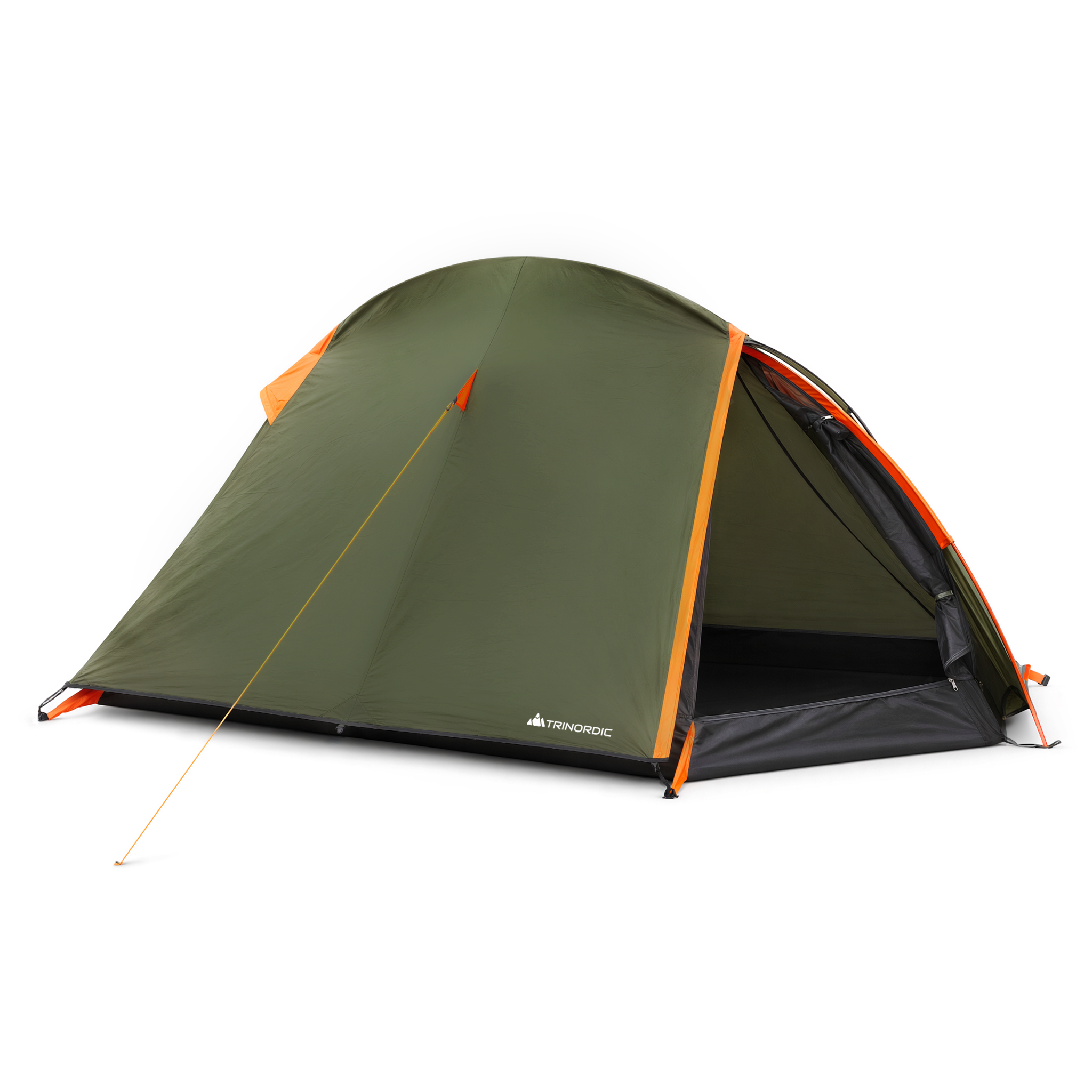
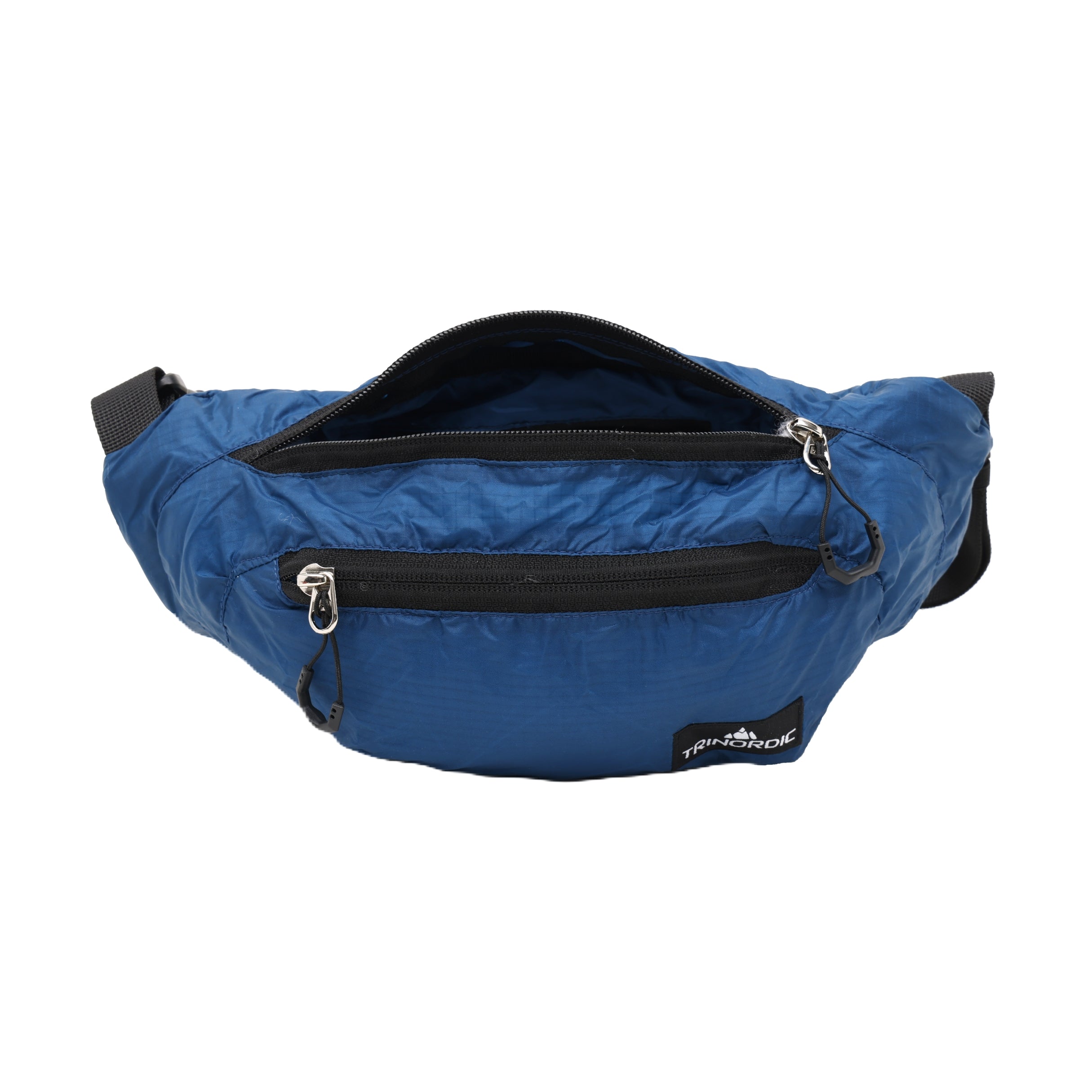
Not much this time, which is a good sign. It has rained almost non-stop for the past week, through his last days in China and into Vietnam, and he still has no complaints about the tent. The small foldable daypack has found a job of its own: strapped to the bike as extra storage, it carried food for the long stretches in Tajikistan, so the other bags did not have to be packed to bursting. The rest of the gear, we will go through properly at the end.
The last two months
The day after our call, Elliot was to leave Ha Giang, heading west through the rice terraces around Sapa and into Laos, crossing it from north-east to south-west and staying away from cities if he can. Then Thailand, and by his estimate about 500 kilometres to Bangkok, which he expects to reach three or four weeks after leaving Ha Giang. From Bangkok, south along the east coast into Malaysia, and along Malaysia’s east coast too, where he hopes for fewer tourists and a lot of sea.
In Part 3, he said he was looking forward to seeing the sea again. It is nearly time.
Around New Year, he expects to reach Singapore, about 21,000 to 22,000 kilometres and ten months after leaving Sweden. After that, he will probably stay in Asia for a while, without the bike.
Next time we speak, it will be from the end of the road.
Follow Elliot’s journey here on the Trinordic Journal and on Instagram at @elliotphilip_.